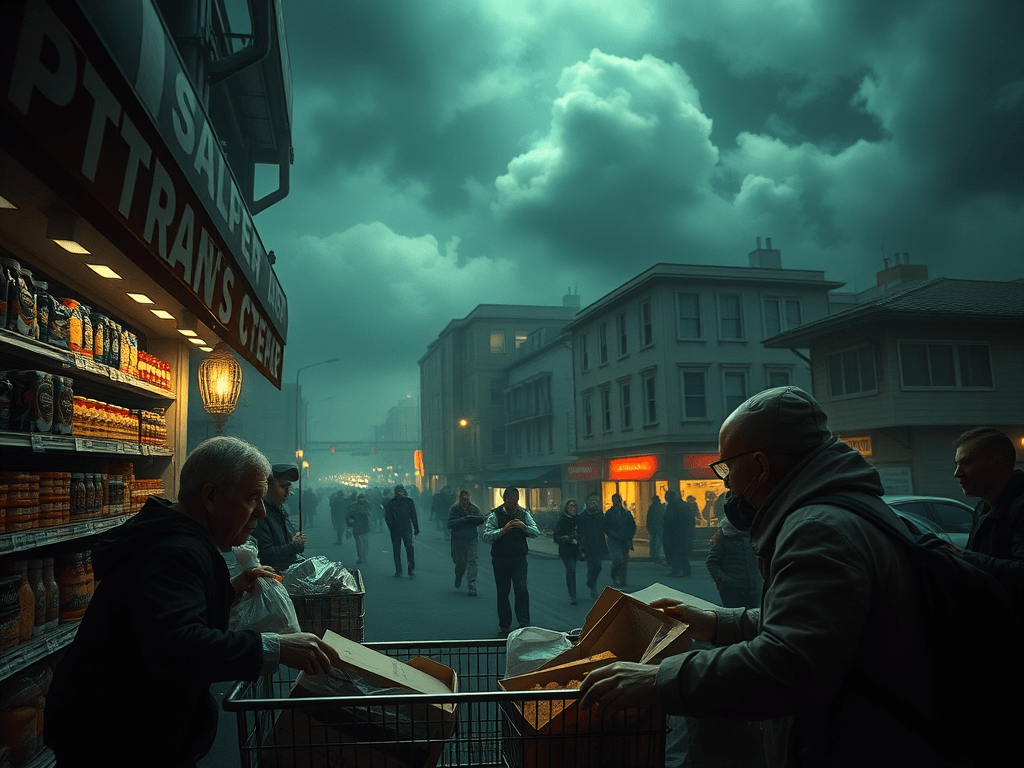
You don’t need a PhD in economics to feel that something’s off.
Groceries cost more, jobs feel more fragile, housing looks like a luxury product, and half the tech CEOs sound like they’re pitching a video game plot instead of running real-world companies. Meanwhile, billionaires are racing each other to space while your rent races you into a corner.
This is what people mean when they talk about late-stage capitalism. It’s not an end date on a calendar. It’s a mood. A vibe. A phase in the life cycle of an economic system that feels increasingly disconnected from reality.
So What Is Late-Stage Capitalism, Really?
It’s the point in a system’s evolution where:
- Markets are no longer free, just engineered
- Wages stagnate while productivity and profits soar
- Basic needs become “subscription services”
- Work is precarious, but shareholders are thrilled
- Governments serve markets instead of citizens
- Every crisis gets monetized—healthcare, climate, war, education
It’s Uber drivers with master’s degrees. Teachers driving DoorDash. People crowdfunding insulin while the stock market hits record highs. It’s burnout, hustle, and “grindset” culture masquerading as freedom. It’s a society that treats rest like laziness and wealth like morality.
In short: it’s the moment when the system stops pretending it’s for everyone.
So What Comes Next?
That’s the question. And we’re all going to have to answer it—whether we want to or not. Because systems don’t last forever. They evolve. They collapse. They mutate. Or, sometimes, they’re dragged kicking and screaming into something new.
Here are five directions we might be headed:
1. State Capitalism
Same market, new driver.
In this version, governments take a more active role—not to help you, but to strategically control markets. Think China’s model: heavy surveillance, controlled growth, and national champions in tech and energy. Markets are tools, not ideals.
Upside: Infrastructure might actually get built.
Downside: Dissent gets a lot more expensive.
2. Technocratic Feudalism
You’ll own nothing—and still pay monthly fees.
Imagine a future where democracy erodes, but Amazon has great customer service. Where mega-corporations are the de facto governments, and your social credit score determines what you can access.
Think: smart homes, dumb laws, and “Terms of Service” that rule your life.
Upside: Efficiency. Innovation. Personalized everything.
Downside: No exit button. No real power.
3. Eco-Social Capitalism
Capitalism with a conscience—and a carbon cap.
This is the idealists’ version: a restructured economy that prioritizes sustainability, equity, and long-term thinking. Maybe we get universal basic income. Maybe we regulate tech. Maybe we stop treating the planet like an ATM.
Upside: Human dignity. Ecological survival.
Downside: Short-term disruption. Lots of angry billionaires.
4. Decentralized Utopia
Crypto, co-ops, and code-based governance.
This one’s for the web3 dreamers. Power moves from central institutions to decentralized networks. DAOs replace corporations. You vote with tokens, earn through participation, and store your wealth outside the banks.
Upside: Radical autonomy and transparency.
Downside: Scams, fragmentation, and the occasional rug pull.
5. Collapse or Authoritarianism
When the lights flicker and the flags get darker.
Not the feel-good option, but one we can’t ignore. If inequality keeps widening, climate shocks intensify, and trust erodes further, we could see the rise of hard borders, strongmen, and failing institutions.
Upside: None.
Downside: All of them.
What Do You Want to Come Next?
This isn’t just an academic exercise. What comes after late-stage capitalism depends on us. On the stories we tell, the systems we build, and the power we choose to either accept or reject.
You don’t have to be a policy wonk to start imagining alternatives. You just have to look at the world around you and ask: Is this working? And if it’s not, what would?
Because the next chapter is being written right now—by corporations, by governments, by you, and by me. And the question isn’t just what comes next.
It’s who gets to decide.
 Mike McCready