
For Independence Day, I’m going to talk about the amazing things about Donald Trump. Now, “amazing” is one of those words. It’s usually used as a positive. But in reality it just means something amazes you, and that’s where I’m coming from today.
Trumps is… kind of amazing. And so are my friends who remain loyal to him.
No, seriously. You’ve got to hand it to him—what he’s pulled off is something no politician in my lifetime has managed. The guy took over an entire political party and convinced its memebers to completely change their values. That’s not easy.
He got the party of Reagan to dump free markets and start rooting for tariffs like they’d just discovered Lenin.
He got the law-and-order crowd to throw their arms around a convicted felon—and not just any felon, but one who encouraged his fans to beat up cops while waving Blue Lives Matter flags. You can’t make that up. And I know many of his followers think the justice system was weaponized against him, and getting them to believe THAT is another weak-mind bender.
He got “family values” voters to shrug off hush money payments to a porn star—while his wife was home with their newborn—because hey, at least he’s not Biden?
He got millions of women to vote for him after he publicly bragged about grabbing them like a broken claw machine.
He got the “Epstein was a deep-state op” crowd to look at the one guy who was literally in the photos, on the plane, at the parties, and say, “Nah, he’s clean.”
He got evangelicals—people who once lost their minds over Obama wearing a tan suit—to go all-in for a man who couldn’t name a single Bible verse and probably thinks Leviticus is a cologne.
And now, after years of branding every Democrat a warmonger, he’s got MAGA influencers practically begging for war in the Middle East, because this time it’s their guy saying so.
But he’s not a salesman. A salesman gives you something—cheap steaks, an ugly hat, a framed certificate for your timeshare in hell. Trump? Trump takes. He takes your money, your dignity, your critical thinking—and leaves you with a bumper sticker and a court date.
What did he actually deliver?
A wall? Nope.
Mexico paying for it? Nope.
Obamacare repealed? Nope.
Muslim ban? Not really.
Budget balanced? Not even close.
National debt reduced? Ha.
Cheaper groceries? Come on.
Foreign wars ended? Insert laugh track.
Did he “Make America Great Again”?
Or just turn it into an international punch line?
And here’s the part that really messes with me—the part that genuinely breaks my heart: I know people. Smart people. Kind people. People I care about. Some of them are still on board. They think Biden was destroying America while Trump actually does it before their eyes.
It didn’t happen all at once. It never does. It was a slow, creeping thing. Like the boiling frog—you don’t realize how far you’ve slipped until the water’s already at a rolling boil and someone’s telling you to blame the deep state for the heat.
And maybe you don’t want to admit it. Maybe it’s too hard to say, “Yeah… I got conned.” I get that. But that’s what happened. You didn’t vote for a movement. You bought into a scam.
And Trump? He’s not done. Conmen don’t stop until there’s nothing left to take.
If this offends you, by all means—let me have it. But before you do, ask yourself:
What exactly are you still defending?


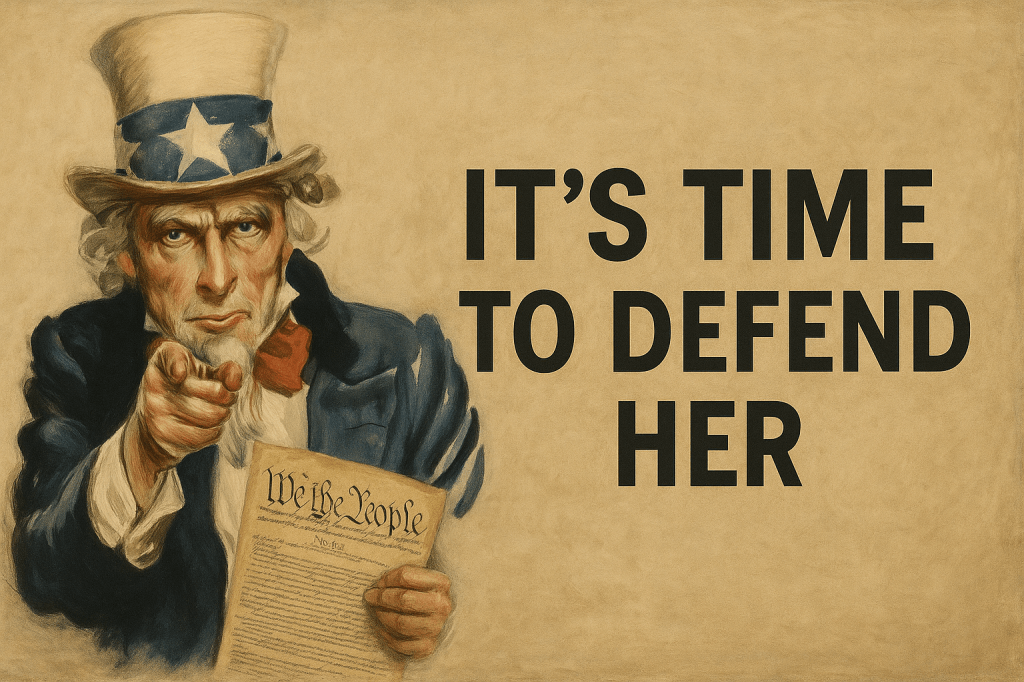


 A New Tribe: MAGA Republicans aren’t just breaking with the left—they’re breaking with the entire Western conservative tradition. Their mindset aligns closer to Russia’s Putin and Turkey’s Erdoğan than to Britain’s
  Goodbye Global Cooperation: The old GOP was about strong alliances (think Bush and Blair “shoulder to shoulder”). MAGA? Not so much. From pulling military support from allies to shrugging at international norms, Trump’s America plays by different rules.
 Autocracy Over Democracy? The Republican Party once championed democracy. Now, MAGA’s values—authoritarian tendencies, distrust of institutions, and nationalism—are pulling them into a different ideological orbit.
 Economics as a Weapon: Trade wars, economic self-harm, and an “America First” approach that even conservative economists are scratching their heads over—this isn’t Reaganomics.
 Shock & Awe Politics: Trump, JD Vance, and their crew operate on a different frequency. What seems disastrous or erratic to traditional Western leaders is just another Tuesday in MAGA-world.



 Mike McCready